

An author you should meet.
Reader, meet Wendell.

Usually I recommend books.
Today I’m recommending an author. His name is Wendell Berry.
More than finding a good book, finding a good author can set you up for a lifetime of enjoyment. You can pick up any of their books and know you’ll enjoy it. So my goal today is to introduce you to an author and his body of work, and let you go pick what you may.
Reader, Meet Wendell
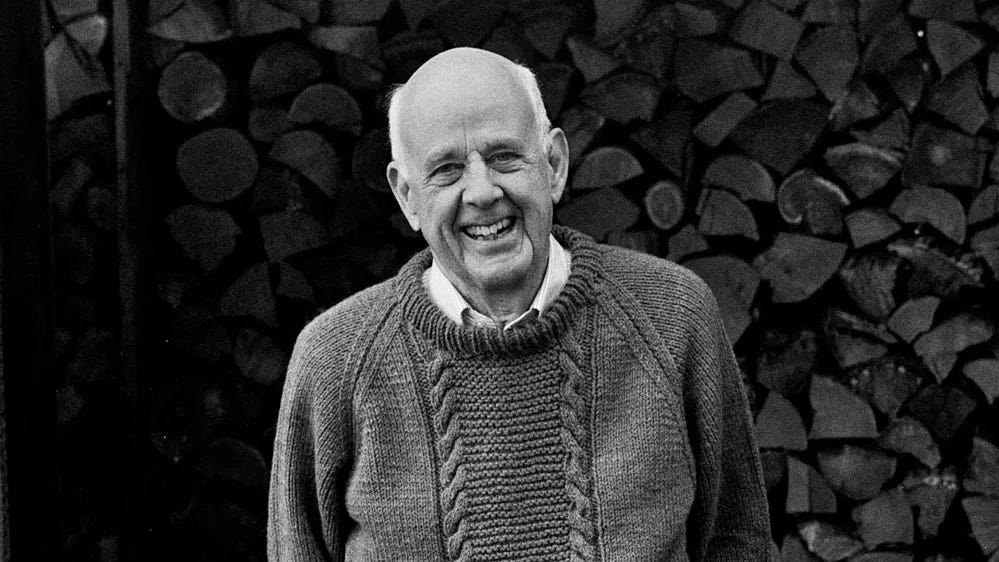
I have so much to say about Wendell Berry. But it’s hard. His work makes me slow down. And as such, summarizing him for a Substack post feels strange and out-of-place.
But I will do my best.
Berry writes fiction, essays, and poetry. All three are good.
He writes as a Kentucky native about Kentucky, about living on your land and taking care of it, about living in your community and being part of it.
He writes about rest and the passage of time.
He writes about children who grow up and stay in town. He writes about children who grow up and leave for the city.
He writes big by writing small.
If you find yourself wondering things (I know I do) —
things like, Should I move? Should I change jobs? How can I be happy? Who can I be happy with? The times are changing — should I change too?
What am I…well, HERE for?
— then I think you should meet Wendell Berry.
He has a way of writing to make a reader at peace. He has opinions — strong ones! — but rarely sounds angry, never sounds belittling. He writes a world you wish was yours, then realize it could be, then realize it is. Your days after reading Berry will seem longer and more pleasant than they did before.
Now. About the books.
Fiction: The Town of Port William
Berry’s fiction takes place in the fictional Kentucky town of Port William. (Berry himself was born in the real Kentucky town of Port Royal.)
The stories and characters intertwine, but could not really be called sequels or prequels of each other. They are almost a history. They can be read independently.
Reading the Port William books is like sitting at a family reunion year after year, growing older, understanding more, slowly hearing stories from different aunts and uncles, slowly piecing together a history from different angles, different ages, until you finally see the family, in all its pain and glory, spread over a century and a half.
It doesn’t matter which book you start with. It’s all good. You might be tempted to read a summary and “get the feel” — trust me, it won’t be worth it. Here’s how I know:
I was introduced to Berry through his fiction during a college class on Communication Ethics.I was assigned Jayber Crow and… did not read it. (Ethical?)
I don’t think I did well on the quiz. I guess I had other stuff going on. But I went back and read it years later and I was glad I did.
You can’t learn slowness quickly.
I read Jayber Crow and then Hannah Coulter and then, of course, Nathan Coulter.
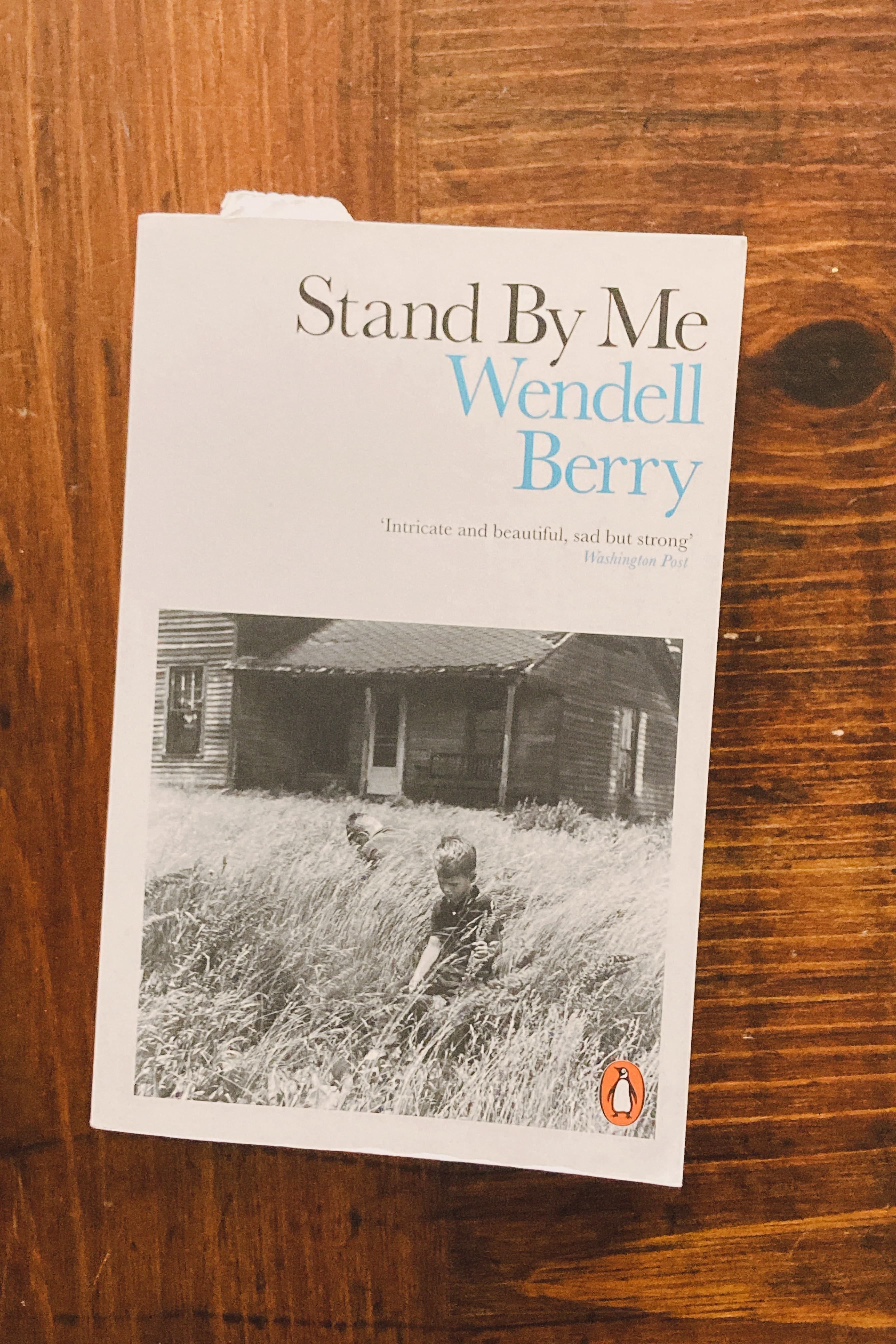
Most recently, I read and loved Berry’s short story collection Stand By Me, which starts in the 1880s and runs to the 1980s. It gave me short glimpses of the members of Port William at different stages of life.
Which one should you start with? I don’t think you can go wrong.
But pick one and read it.
The Poet
As I said, I was introduced to Berry through his fiction. I’m a newcomer to his poetry. (And, truthfully, to poetry in general.)
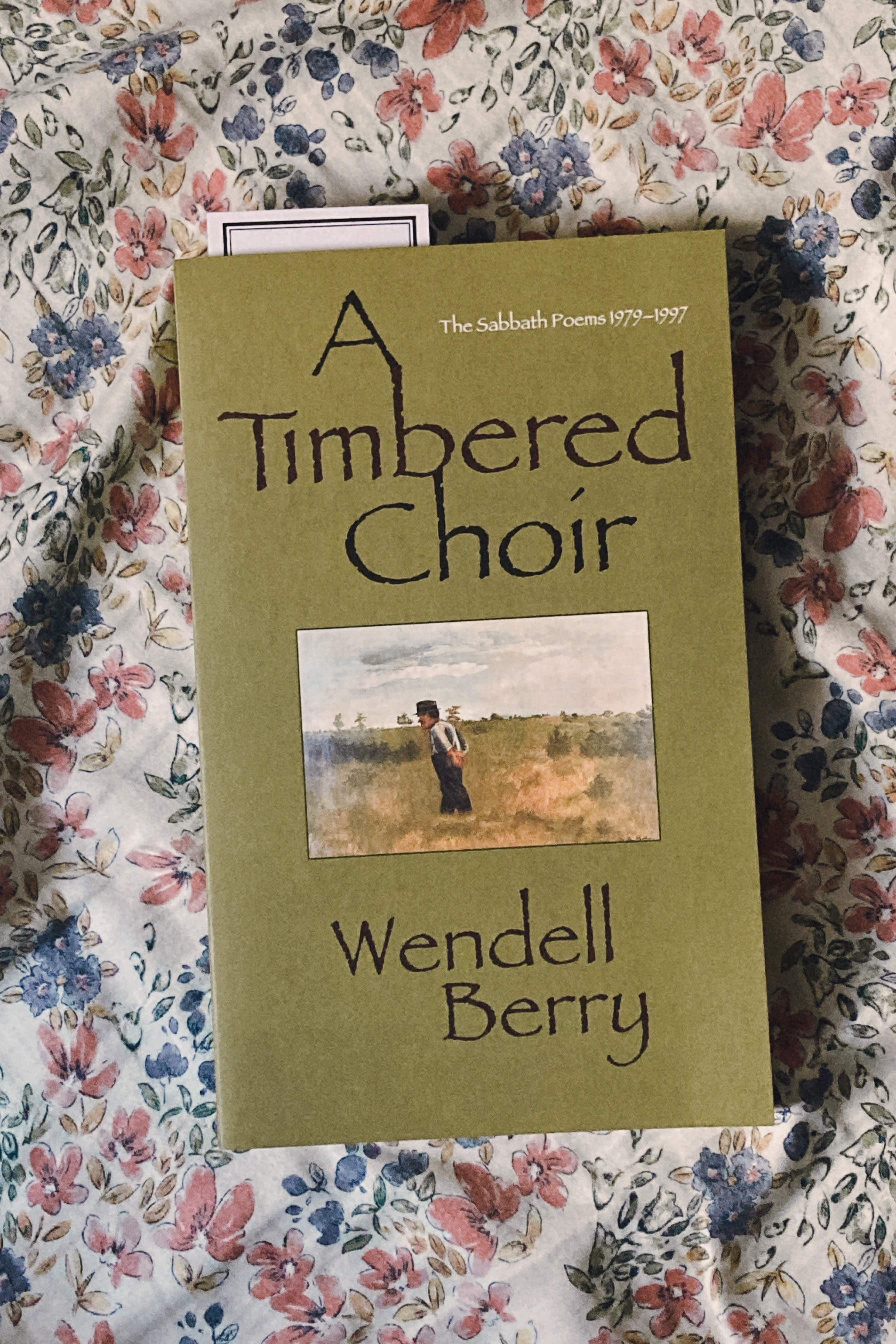
But lately, each morning before work, I have been sitting outside and reading a piece from his collection A Timbered Choir. It settles me.
One stanza I loved, I will put here (without attempting to explain).
The mind that comes to rest is tended
In ways that it cannot intend
Is borne, preserved, and comprehended
By what it cannot comprehend.
If you enjoy poetry, or would like to, you could start your Berry journey there.
Berry the Essayist
If you’re more into non-fiction, or have read some of Berry’s fiction and want to hear more about what he thinks directly, you could try his essays.
Topically, he talks about taking care of the land, examining his use of technology, what “community” means, the “good life”, work, family, life, death.
They’re some hot topics, but I don’t think you need to agree with his takes 100% to enjoy reading them. (One of my favorite essays of his is called “Why I Am Not Going To Buy a Computer” — I’ll give you three guesses to guess what I’m writing this on.)
I’ve only scratched the surface of his essays, but I’ve loved all I’ve read — so, again, start anywhere. (But if you need a recommendation, “Why I Am Not Going To Buy a Computer” is a relatively light-hearted place to begin. Here’s a link…I don’t think it’s official, so make sure to buy the book if you like it. Consider this a sample I guess.)
What More Can I Say?
Well, what more can I say? A lot. I could.
I could talk about the way Berry has shaped and changed my idea of community from a group of similar people with shared ideas to a group of different people in a shared place;
I could talk about how Berry’s writings are challenging enough to make me really examine how I’m living my life, but patient enough to keep me at peace with it;
I could talk about how Berry is still living (ninety-one) — how he has enough of a grasp on the past to tell it truthfully, enough of a presence in today to not dismiss the present grumpily — how he doesn’t put the past on a pedestal, but doesn’t put the present on one, either;
I could talk a lot about Wendell Berry.
But I’d rather you meet him yourself.
-Tim
P.S. If you wanna join our in-real-life Reasons to Read Mail Club & get a big brown envelope in your real-life mailbox every month, you can check that out here!
I discovered Wendell Berry through a video of yours. Reading “The Wild Birds” gave me such serene joy and appreciation for simpler and more intentional living. For a slowly yet carefully built local community. For observing and enjoying the mundane.
His writing is truly a delight and I’m sure this was just the first of many of his works on my shelf. Thank you for recommending!
I loved the essay of his you linked, it's one of the most interesting five-minute reads I've done in a while.
My favorite part was the part where he responds to angry letters about the article. I've read magazines where authors respond to letters send in about their articles, but they're always pretty chill. It was almost jarring to see how internet-esque those letters were.